Today I found myself deeply moved as I reflected on the first reading from Acts 6–7 — the account of Stephen, the first Christian martyr. His story isn’t just ancient history. It’s a mirror held up to my own life, my own courage, and my own willingness to stand for Christ when the world pushes back.
As I read through the passage, I was struck again by how rapidly the early church grew. Thousands were coming to faith, and with that growth came real challenges — organizational needs, cultural tensions, and disagreements about fairness. Even in the earliest days, the church wasn’t perfect. Yet God raised up faithful servants to meet those needs, and among them was Stephen, “a man full of faith and the Holy Spirit.”
The Courage of Stephen
Stephen wasn’t an apostle. He wasn’t a pastor. He was a layman — a believer with a heart full of Christ and a willingness to serve. God gifted him in extraordinary ways, even enabling him to perform miracles. But what stands out most is not his power — it’s his courage.
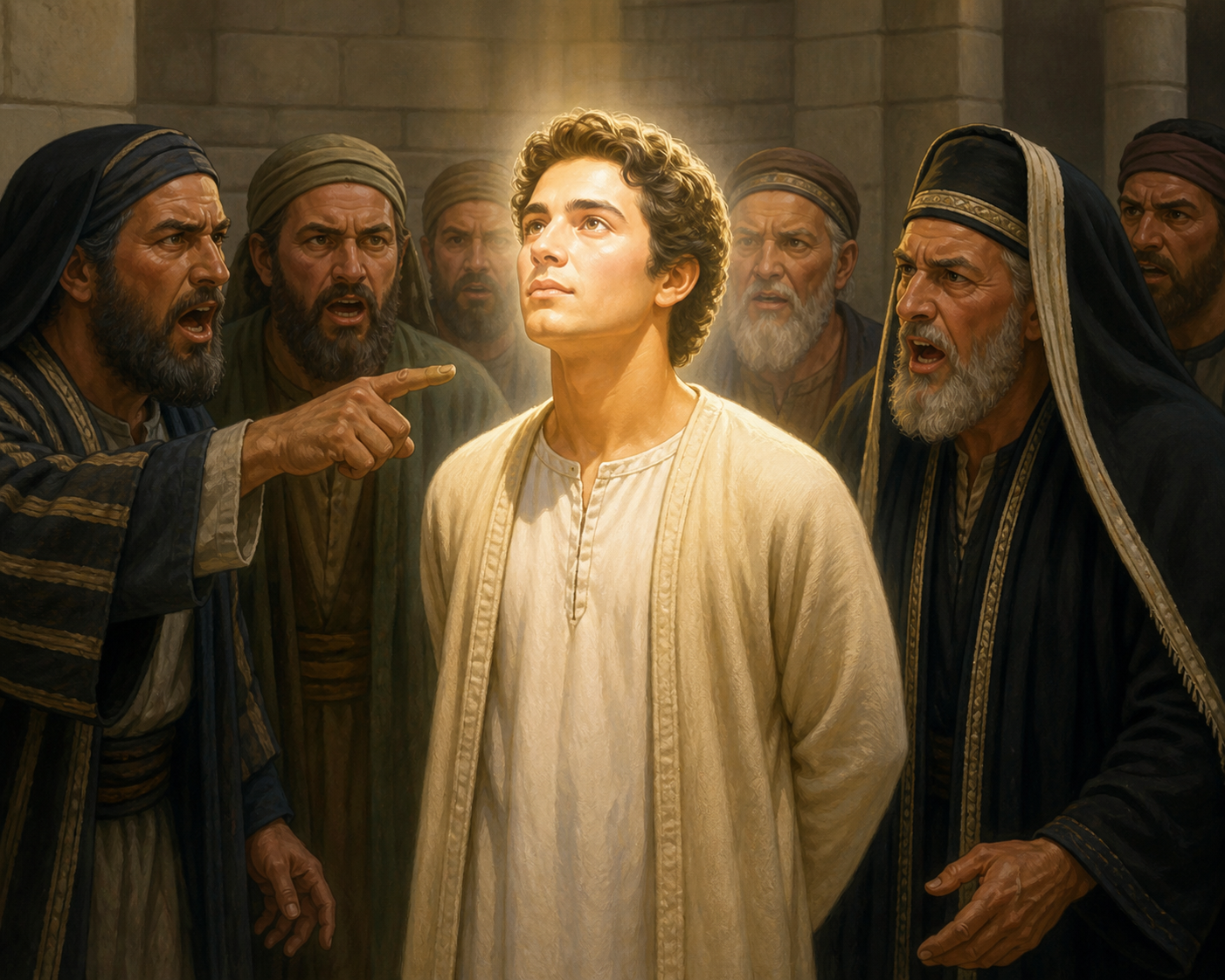
When Stephen spoke about Jesus, people couldn’t refute him. Scripture says they “could not withstand the wisdom and the Spirit with which he was speaking.” And when people can’t win an argument, they often turn to anger. That’s exactly what happened. False accusations. Twisted words. Public hostility. A mob stirred up against him.
Yet Stephen didn’t back down.
He didn’t soften the truth to make it more palatable. He didn’t hide his faith to avoid conflict. He spoke clearly, boldly, and faithfully — even when it enraged the crowd. He reminded them of their history, their resistance to God, and their rejection of the Messiah. His words were strong, but they were true.
“You stiff-necked people! Your hearts and ears are still uncircumcised. You are just like your ancestors: You always resist the Holy Spirit! Was there ever a prophet your ancestors did not persecute? They even killed those who predicted the coming of the Righteous One. And now you have betrayed and murdered him—you who have received the law that was given through angels but have not obeyed it.” Acts 7:51-53
And when the violence finally came, Stephen responded the same way Jesus did on the cross. As stones rained down on him, he prayed, “Lord Jesus, receive my spirit,” and “Lord, do not hold this sin against them.”
No bitterness. No hatred. Just faith. Just forgiveness. Just Christ.
Stephen’s death wasn’t a defeat. It was a victory — a testimony that faithfulness matters more than safety, that truth matters more than popularity, and that Christ is worth everything.
To Speak Truth
As I think about Stephen, I can’t help but ask myself: Am I willing to stand for Christ with that kind of courage? Am I willing to speak truth even when it’s unpopular? Am I willing to live boldly, faithfully, and unapologetically for the One who died and rose for me?
Most of us will never face what Stephen faced. But many of our brothers and sisters around the world do — even today. And even here, in a culture that often resists biblical truth, we are called to stand firm, speak clearly, and live faithfully.
Stephen’s life reminds me that the Christian faith isn’t about being “nice.” It’s about being true. It’s about being faithful. It’s about being courageous in a world that desperately needs the hope of Jesus Christ.
May God give us the strength to follow Stephen’s example — to speak with wisdom, to live with conviction, and to trust Christ with everything.

Join Us This Sunday
If you’re looking for a church where God’s Word is preached clearly, boldly, and faithfully, I invite you to join us at:
Our Savior Lutheran Church in Centereach, NY Every Sunday
Come hear the Word, grow in faith, and be strengthened to live boldly for Christ in a world that needs His truth.
FAQ’s
1. Who was Stephen in the Bible?
Stephen was one of the seven men chosen by the early church to help care for the needs of believers (Acts 6). He was described as “a man full of faith and the Holy Spirit” and was known for his wisdom, bold preaching, and even miracles God performed through him. He became the first Christian martyr, giving his life rather than deny Jesus.
2. Why is Stephen considered the first martyr?
Stephen was falsely accused, dragged before the council, and ultimately stoned to death because he boldly proclaimed Jesus as the Messiah. His refusal to renounce Christ — even under threat of death — makes him the first recorded believer to die for his faith.
3. What made Stephen’s witness so powerful?
Stephen’s strength came from the Holy Spirit. Scripture says his opponents “could not withstand the wisdom and the Spirit with which he spoke.” His courage wasn’t rooted in personality or training — it was rooted in Christ living in him.
4. Why did Stephen use such strong language in his speech?
Stephen reminded the leaders of Israel of their long history of resisting God’s messengers. His words — “stiff‑necked” and “uncircumcised in heart” — weren’t insults but truth spoken in love, calling them to repentance. Sometimes faithfulness requires clarity, not comfort.
5. What can we learn from Stephen’s response to persecution?
Stephen modeled Christlike courage and Christlike compassion. Even as stones struck him, he prayed: “Lord Jesus, receive my spirit.” “Lord, do not hold this sin against them.” He stood firm in truth without becoming bitter or hateful.
6. Do Christians still face persecution today?
Yes. In many countries, believers face imprisonment, violence, or death for following Jesus. While most Christians in America do not face physical persecution, many experience cultural pressure, hostility, or ridicule for standing on biblical truth.
7. How can I stand up for my faith in today’s world?
- Know the Word — Stephen’s boldness came from Scripture.
- Stay filled with the Spirit — courage is a gift God gives.
- Speak truth with grace — clarity without cruelty.
- Expect resistance — faithfulness has always been costly.
- Keep your eyes on Christ — Stephen saw Jesus standing for him; we stand because He stands with us.
8. Does standing for truth mean being harsh or argumentative?
Not at all. Stephen reasoned with people, spoke respectfully, and showed forgiveness even to his killers. But he also refused to compromise the truth. Faithfulness is not the same as harshness — but neither is it silence.
9. What if people get angry when I speak about Jesus?
Stephen’s story shows that anger doesn’t mean you’re wrong. Sometimes truth confronts deeply held beliefs. Your responsibility is to speak faithfully, lovingly, and clearly — and leave the results to God.
10. How can Stephen’s example encourage me today?
Stephen reminds us that:
- God sees us.
- God strengthens us.
- God stands with us.
- God uses our witness — even when it’s costly.
- Faithfulness matters more than popularity or comfort.
His life calls us to courage, conviction, and confidence in Christ.